Ion channel screening services

CONTACT US

Customised ion channel assays to accelerate drug discovery hit identification, hit-to-lead and lead optimisation

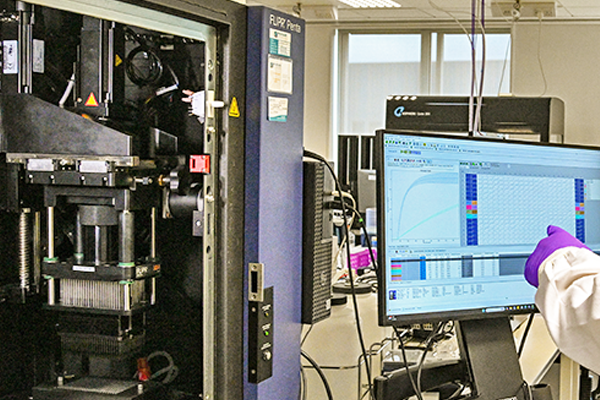
Metrion provides specialist ion channel screening services using automated electrophysiology, manual patch clamp and fluorescence-based assay platforms to support early-stage drug discovery programmes.
Our expertise in electrophysiology and fluorescence-based assays sets us apart, ensuring robust and reliable data generation. Our experienced ion channel scientists, led by an expert leadership team, develop and deliver robust, reproducible assays tailored to your target biology, pharmacology and screening objectives. From primary screening and structure–activity relationship (SAR) studies through to detailed mechanism-of-action investigations, we generate high-quality data to support confident decision-making throughout the drug discovery process.

Our ion channel screening capabilities

Ion channel assay development and validation

Successful ion channel drug discovery depends on robust and reproducible assay performance.

Our scientists specialise in:

  • Stable and transient cell line generation
  • Assay optimisation
  • Pharmacological validation
  • Reference compound profiling
  • Assay troubleshooting
  • Complex assay development
  • Quality control and data analysis

Every assay is tailored to the specific target biology and project requirements to ensure generation of high-confidence pharmacology data.

Automated electrophysiology screening

Automated patch clamp technologies enable medium- to high-throughput ion channel screening while maintaining high-quality electrophysiological data.

Our automated electrophysiology services support:

  • Hit identification and confirmation
  • SAR screening
  • Concentration–response analysis
  • Pharmacological profiling
  • Selectivity screening
  • Lead optimisation

We have extensive experience using the Sophion Qube automated electrophysiology platform to deliver robust and reproducible assays across a wide range of ion channel targets.

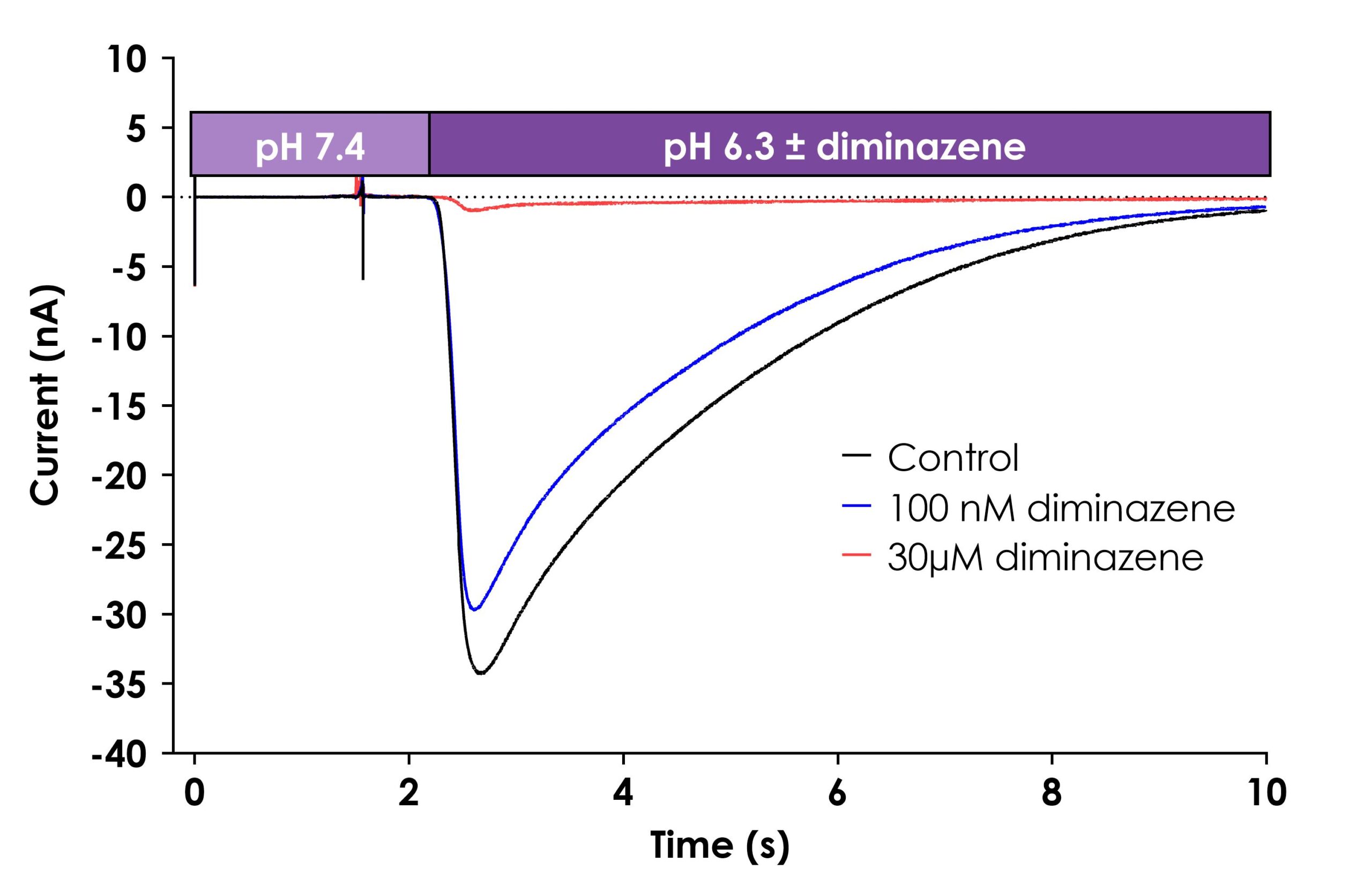
Example recording of hASIC1a inward current recorded on the Qube automated electrophysiology platform

Figure 1. Example recording of hASIC1a inward current recorded on the Qube automated electrophysiology platform. Cells are held at -60 mV with ASIC1a activated by the addition of extracellular solution buffered to pH 6.3 (black trace). The effect of inhibitor, diminazene, at 100 nM and 30 µM on the inward current is displayed in the blue and red traces, respectively.

Figure 2. Diminazene concentration-response curve displaying an IC50 of 1.13 µM (pIC50 = 5.95).

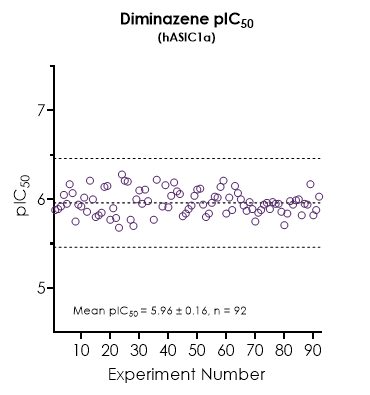
Figure 3. The pIC50 values of the reference compound, diminazene, against ASIC1a included in the Qube experiments when supporting Medicinal Chemistry Hit-to-Lead activities.

Manual patch clamp electrophysiology

Manual patch clamp remains the gold standard for detailed ion channel characterisation and complex pharmacological investigations.

Our experienced electrophysiologists use manual patch clamp approaches for:

  • Mechanism-of-action studies
  • State-dependent pharmacology
  • Complex gating behaviour
  • Low-throughput specialised assays
  • Current clamp and voltage clamp studies
  • Validation of automated assay findings

These studies are particularly valuable during lead optimisation and translational pharmacology programmes where detailed mechanistic understanding is required.

Fluorescence-based ion channel assays

Fluorescence-based assays provide efficient higher-throughput approaches for ion channel screening and profiling.

We develop and optimise assays including:

  • Membrane potential assays
  • Calcium flux assays
  • Ligand-gated ion channel assays
  • Functional screening assays

These platforms can provide effective screening solutions for large compound libraries and complement electrophysiology-based approaches during screening cascades.

Supporting every stage of ion channel drug discovery

Hit identification

We support early-stage screening programmes with robust assays designed to identify and confirm active compounds against ion channel targets.

Hit-to-lead optimisation

Our rapid screening workflows generate high-quality SAR data to guide medicinal chemistry decision-making and accelerate progression of promising series.

Lead optimisation

Detailed electrophysiology and mechanistic pharmacology studies support optimisation of potency, selectivity and developability.

Safety pharmacology

We provide ion channel safety profiling services, including hERG screening and selectivity assessment, to help identify potential liabilities early in development.

Mechanism-of-action studies

Our scientists conduct detailed biophysical and pharmacological investigations to characterise compound behaviour and support translational decision-making.

Ion channel targets supported

We support a broad range of ion channel families and therapeutic targets.

Voltage-gated ion channels

  • Sodium channels NaV1.x
  • Potassium channels KV7.x
  • Calcium channels CaV2.x

Ligand-gated ion channels

  • GABA receptors
  • NMDA receptors
  • AMPA receptors
  • P2X receptors

TRP channels

  • TRPV
  • TRPA
  • TRPML

ASIC channels

  • ASIC1a
  • ASIC1b
  • ASIC3

Additional ion channel targets

  • hERG
  • ENaC
  • HCN channels
  • Chloride channels

If your target is not listed, please contact us to discuss bespoke assay development options.

Therapeutic areas

With more than 250 years of combined ion channel drug discovery expertise, we support biotech and pharmaceutical companies across:

Why partner with Metrion for ion channel screening?

Specialist ion channel expertise

As a specialist ion channel CRO, our experienced ion channel scientists bring decades of industry expertise across assay development, electrophysiology, ion channel pharmacology and drug discovery support. We have extensive experience supporting programmes targeting voltage-gated, ligand-gated, TRP and ASIC ion channels across multiple therapeutic areas.

Robust, quality, assays for reproducible data

We combine robust assay design with rigorous quality control to generate reliable, reproducible ion channel pharmacology data. Our scientists develop and optimise assays to support consistent performance, reliable compound profiling and confident decision-making throughout drug discovery programmes.

Flexible, customised screening solutions

Every programme is tailored to your scientific objectives, target biology, pharmacology and project timelines. We support a wide range of ion channel assay formats, screening strategies and mechanistic pharmacology studies.

Rapid turnaround for discovery programmes

We understand the importance of timely data generation during hit identification, hit-to-lead and lead optimisation programmes. Our workflows are designed to support efficient progression of ion channel drug discovery projects.

Integrated pharmacology support

Our services span ion channel screening including high-throughput screening, neuroscience and cardiac safety to support progression through the discovery pipeline. This includes automated electrophysiology, manual patch clamp and fluorescence-based ion channel assay platforms. We also provide ready-to-go and customised cell lines engineered for reliable, reproducible screening success.

Access to commercially available compound libraries

We provide access to commercially available compound libraries, including Assay.Works and Enamine collections, with freedom to operate to support ion channel screening and profiling programmes.

Frequently asked questions

What is automated patch clamp electrophysiology?

Automated patch clamp is an electrophysiology technique that enables higher-throughput measurement of ion channel activity while maintaining high-quality functional data. It is widely used in drug discovery screening and lead optimisation.

What is the difference between electrophysiology and fluorescence assays?

Electrophysiology directly measures ion channel currents and provides detailed functional data. Fluorescence assays are typically higher throughput but provide indirect measurements of ion channel activity.

Which ion channels are commonly screened in drug discovery?

Common ion channel targets include sodium (Nav), potassium (Kv), calcium (Cav), TRP, ASIC and ligand-gated ion channels such as GABA and NMDA receptors.

What is hERG screening?

hERG screening assesses compound activity against the hERG potassium channel to identify potential cardiac safety liabilities during drug development.

Can Metrion develop bespoke ion channel assays?

Yes. We specialise in developing customised ion channel assays tailored to specific targets, pharmacology and project requirements.

Ion Channel Screening Resource Library
Simultaneous assessment of current response and ΔV½ enables sensitive characterisation of KV7 modulators across screening and profiling workflows

By accurately defining the drug exposure levels that affect QRS duration, researchers can establish safety margins, prioritise lower-risk compounds, and reduce the chance of late-stage failures due to cardiac toxicity

Robust Kv7 voltage gated potassium ion channel profiling for confident compound selection

By accurately defining the drug exposure levels that affect QRS duration, researchers can establish safety margins, prioritise lower-risk compounds, and reduce the chance of late-stage failures due to cardiac toxicity

VIEW ALL RESOURCES
Metrion is a contract research organisation (CRO) specialising in high-quality preclinical drug discovery services.
magnifier
linkedin facebook pinterest youtube rss twitter instagram facebook-blank rss-blank linkedin-blank pinterest youtube twitter instagram