Cardiac safety screening services

CONTACT US

Reliably evaluate the proarrhythmic and cardiotoxic liabilities of your compounds

Our expert electrophysiologists and cell biologists help you identify and de-risk proarrhythmic and cardiotoxic liabilities with high-quality data, rapid turnaround times and scientifically robust interpretation. Comprehensive cardiac safety assays are offered for early discovery, lead optimisation and IND-enabling studies, including GLP hERG testing, CiPA ion channel profiling and clinically translatable hiPSC cardiomyocyte assays.

Our cardiac safety team is led by experts who have exceptional ion channel electrophysiology and drug discovery expertise, complemented by a team of experienced cell biologists who create novel cell lines, to offer:

  • High quality, cost-effective compound screening.
  • Detailed characterisation of lead compounds in a range of high-quality assays.
  • Translational services including confirmation of efficacy in stem cell and other phenotypic models.
  • Flexible approach that best suits your project and budget.
  • Rapid turn-around times, reporting and data interpretation by highly experienced ion channel scientists.

Ion channel profiling services

Ion channels play a central role in cardiac electrophysiology and are key targets in preclinical cardiac safety assessment. Our ion channel screening services provide high-quality electrophysiology data to evaluate proarrhythmic liability and support informed decision-making during drug discovery.

Our experienced scientists deliver detailed characterisation of compound effects using validated assay platforms and flexible screening strategies tailored to your project requirements.

Ion channel assays:

Cardiac ion channel profiling

  • Assessment of core cardiac ion channels: hERG, NaV1.5 and CaV1.2
  • Expanded CiPA cardiac panel: hERG, NaV1.5 (late current), CaV1.2, Kir2.1, KV4.3_KChIP and KV7.1_MinK
  • Additional cardiac channels: HCN4 and KV1.5
  • Read about CiPA screening and hERG screening

GLP hERG testing

  • GLP hERG profiling to support Investigational New Drug (IND) applications
  • Performed in accordance with current ICH S7B guidelines
  • Read about GLP hERG testing

Right: Comparison of GLP hERG IC50 values from Metrion versus published ICH E14/S7B training material values.

hiPSC cardiomyocyte assays:

hiPSC cardiomyocyte assay for early cardiac de-risking

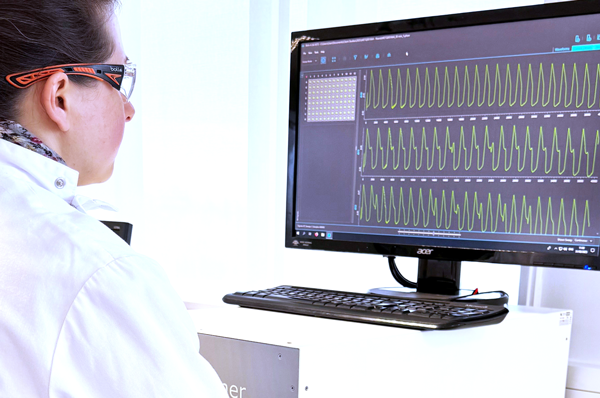
  • High throughput/high resolution assessment of compound effects on action potential morphology using voltage dye
  • Predicts free compound exposure associated with 10ms change in clinical QTc following both acute (30 min)and chronic (24 h) treatment
  • Defines probability of clinical QRS liability
  • Aligns with current ICH S7B guidelines
  • Read about our clinically translatable hiPSC cardiomyocyte assay for early cardiac derisking
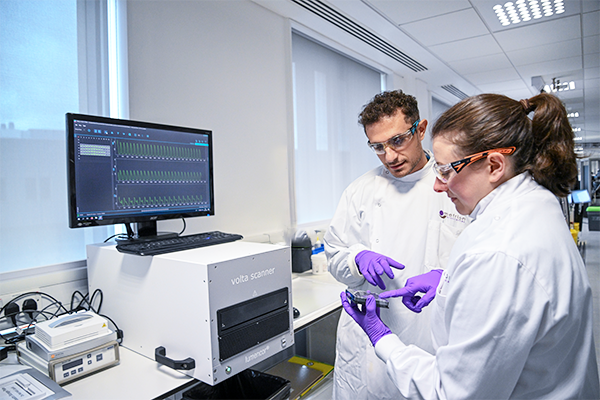
Right: Early cardiac derisking using the VOLTA platform.

hiPSC cardiomyocyte current clamp profiling

Right: Drug effects on hiPSC-derived cardiomyocyte responses.

hiPSC cardiomyocyte toxicity testing

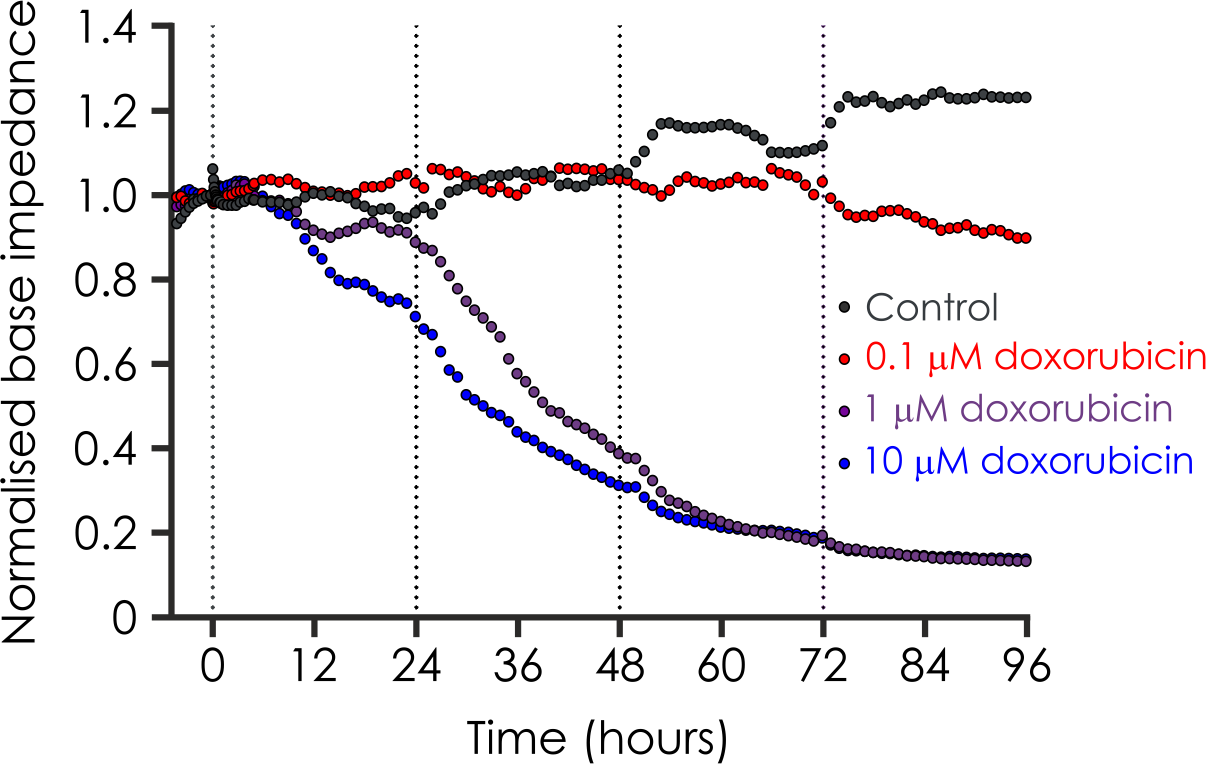
Right: Effects of Doxorubicin on hiPSC impedance using CardioExcyte.

Why choose Metrion for cardiac safety screening?

Deep electrophysiology expertise

Our cardiac safety team combines exceptional ion channel electrophysiology expertise with extensive drug discovery experience.

High-quality data

We deliver scientifically rigorous data generated using validated assays and robust experimental design. Reports are not just a summary but a strategic tool to support your decision-making and move your research forward with confidence.

Flexible study design

We tailor screening strategies to your project stage, timelines and budget requirements.

Translational insight

Our integrated ion channel and hiPSC cardiomyocyte assays provide clinically relevant cardiac safety assessment.

Rapid turnaround

Fast study execution and expert interpretation help accelerate decision-making during drug discovery.

Cardiac safety solutions for drug discovery

Early discovery cardiac de-risking

Rapidly identify potential cardiac liabilities during hit identification and lead optimisation using high-throughput ion channel and hiPSC cardiomyocyte assays. These approaches support early decision-making by enabling efficient SAR screening, early hERG assessment, and prioritisation of lead compounds, while helping to identify potential QT liability risks before significant development investment.

Recommended assays for this stage include hERG screening, core ion channel profiling, and hiPSC voltage dye assays.

Lead optimisation and mechanistic profiling

As compounds advance, deeper insight into cardiac electrophysiology liabilities becomes essential. Expanded ion channel panels and translational phenotypic models provide mechanistic understanding of compound effects, supporting multi-ion-channel assessment, mechanistic electrophysiology studies, CiPA profiling, and prediction of QRS liability.

Recommended assays include expanded CiPA panels, hiPSC current clamp profiling, and advanced ion channel profiling.


IND-enabling cardiac safety studies

For later-stage development and regulatory submission, GLP-compliant cardiac safety studies provide robust data aligned with current ICH S7B guidance. These studies support IND submissions, regulatory risk assessment, and confirmatory cardiac safety evaluation through validated testing strategies and expert interpretation.

Recommended assays include GLP hERG testing and translational hiPSC cardiomyocyte assays.

Frequently asked questions

What is cardiac safety screening?

Cardiac safety screening evaluates whether a compound may interfere with cardiac electrophysiology or cause cardiotoxicity. Common approaches include ion channel assays, hERG testing, CiPA profiling and hiPSC cardiomyocyte models.

What is the hERG assay used for?

The hERG assay assesses whether compounds inhibit the hERG potassium channel, which is associated with QT prolongation and increased risk of ventricular arrhythmias.

What is the difference between hERG and CiPA screening?

hERG screening evaluates a single cardiac ion channel, while CiPA screening assesses multiple ion channels and incorporates mechanistic approaches to improve prediction of proarrhythmic risk.

What are hiPSC cardiomyocyte assays?

hiPSC cardiomyocyte assays use human stem cell-derived cardiac cells to assess electrophysiological and cardiotoxic effects in a clinically relevant cellular model.

Are GLP hERG studies required for IND applications?

GLP hERG studies are commonly included in regulatory cardiac safety packages to support IND submissions and demonstrate compliance with current ICH S7B guidance.

Webinar recordings

Cardiac Safety Screening Resource Library
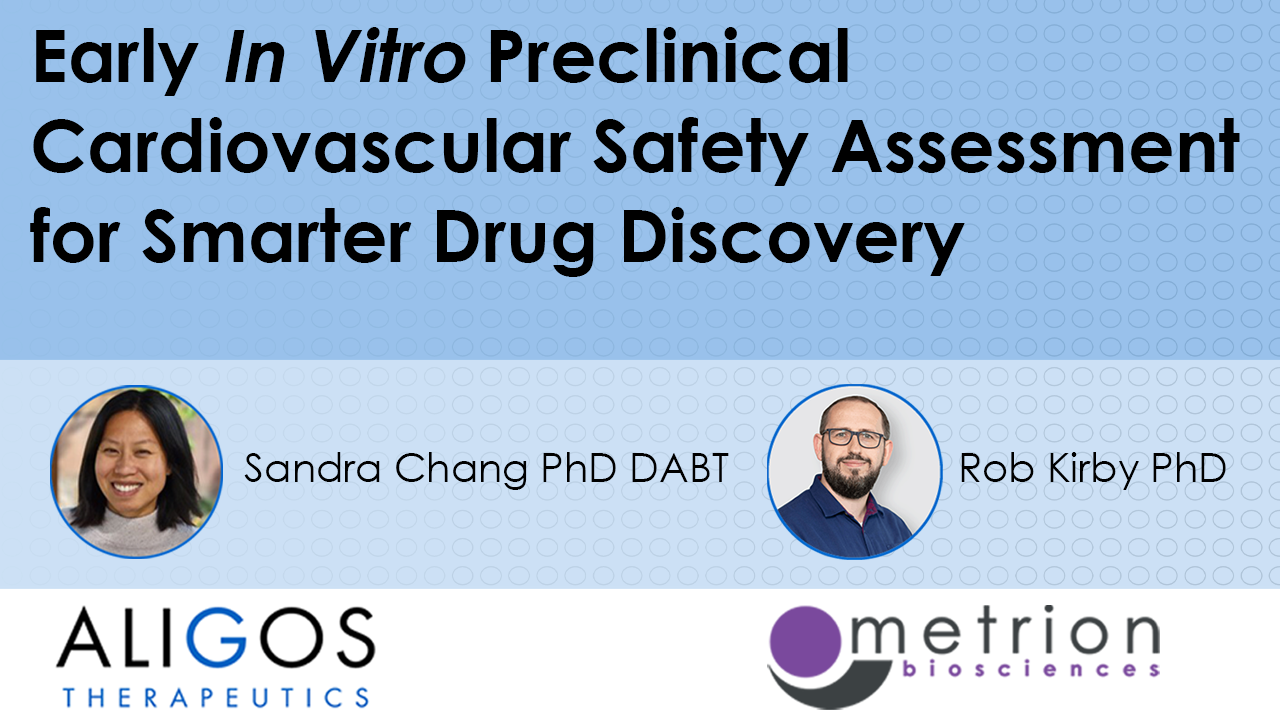
Future-proof cardiac safety: Scalable hiPSC cardiomyocyte new approach methodologies (NAMs) that de-risk earlier and strengthen IND packages

The key question is no longer whether to adopt NAMs, but how to implement them with confidence while continuing to meet evolving regulatory expectations and protecting programme value.

Action Potential Waveform Analysis in Human iPSC-Cardiomyocytes Enables Mechanistic Assessment of Multichannel Cardiac Effects

Optical voltage imaging of human iPSC-derived cardiomyocytes was used to assess electrophysiological effects of compounds beyond hERG inhibition. Action potential waveform analysis revealed compound-specific and concentration-dependent changes, enabling mechanistic differentiation of multichannel activity and demonstrating a human-relevant approach for translational cardiac safety assessment.

VIEW ALL RESOURCES
Metrion is a contract research organisation (CRO) specialising in high-quality preclinical drug discovery services.
magnifier
linkedin facebook pinterest youtube rss twitter instagram facebook-blank rss-blank linkedin-blank pinterest youtube twitter instagram