What is NaV1.8?
NaV1.8 is a voltage-gated sodium channel predominantly expressed in peripheral sensory neurons. It plays a critical role in the initiation and transmission of pain signals and has emerged as an important target for the development of non-opioid pain therapies.
Why is NaV1.8 an attractive target for pain drug discovery?
Selective inhibition of NaV1.8 has the potential to reduce pain while avoiding many of the safety and dependency concerns associated with opioid-based treatments. Clinical and preclinical studies have demonstrated the importance of NaV1.8 in acute, inflammatory and neuropathic pain pathways.
What compounds can be tested using Metrion's NaV1.8 assays?
Metrion's NaV1.8 assays can be used to evaluate small molecules, peptides and other therapeutic modalities designed to modulate NaV1.8 channel activity. Assays can support screening, profiling and lead optimisation programmes.
What electrophysiology platforms are available for NaV1.8 studies?
Metrion offers NaV1.8 studies using gold-standard manual patch clamp electrophysiology as well as QPatch and Qube automated patch clamp platforms. This enables both detailed mechanistic investigations and higher-throughput screening campaigns.
How are Metrion's NaV1.8 assays validated?
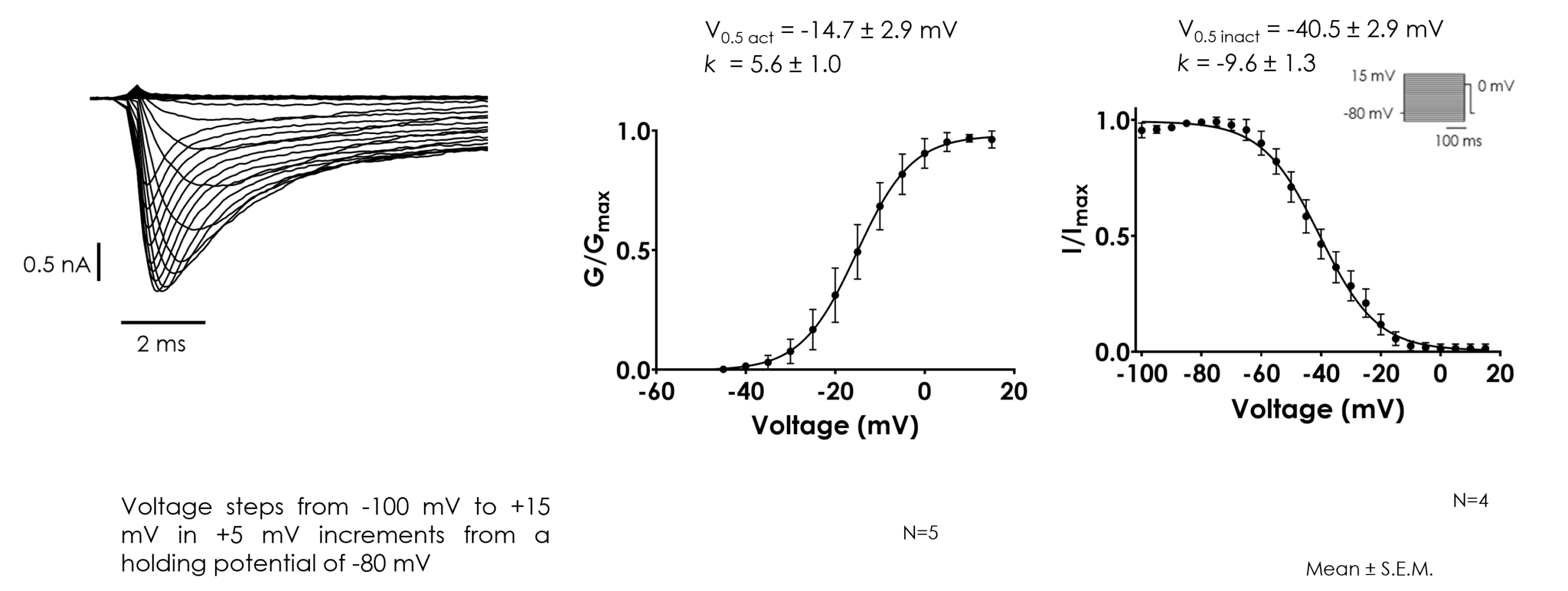
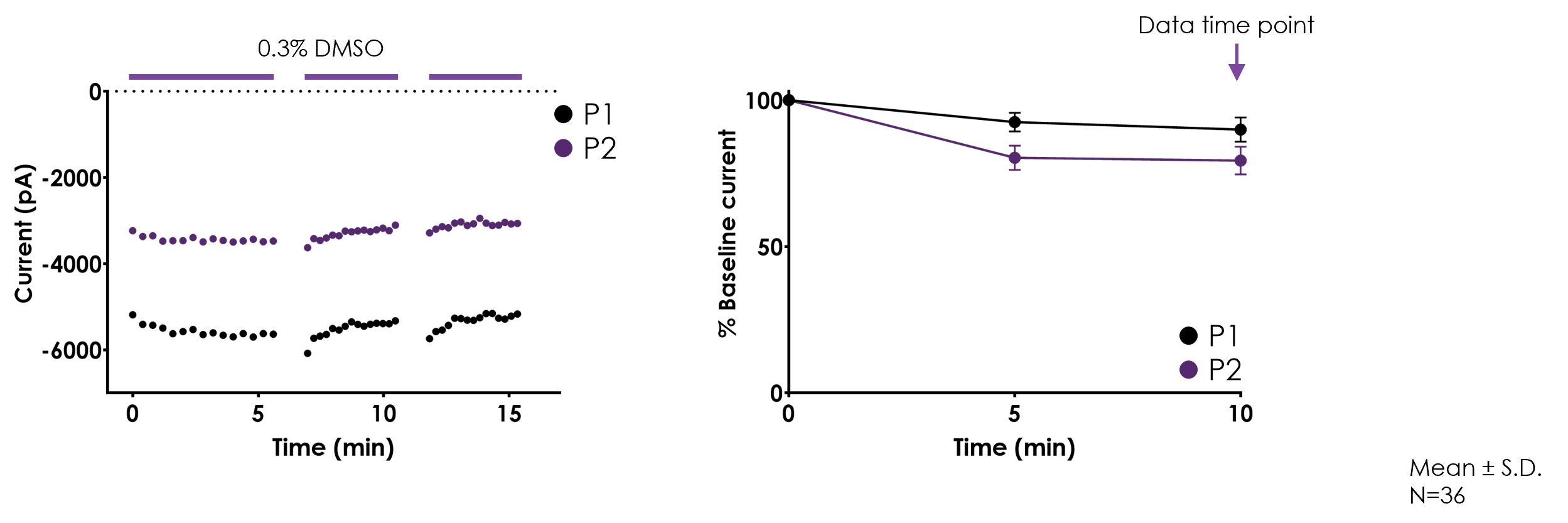
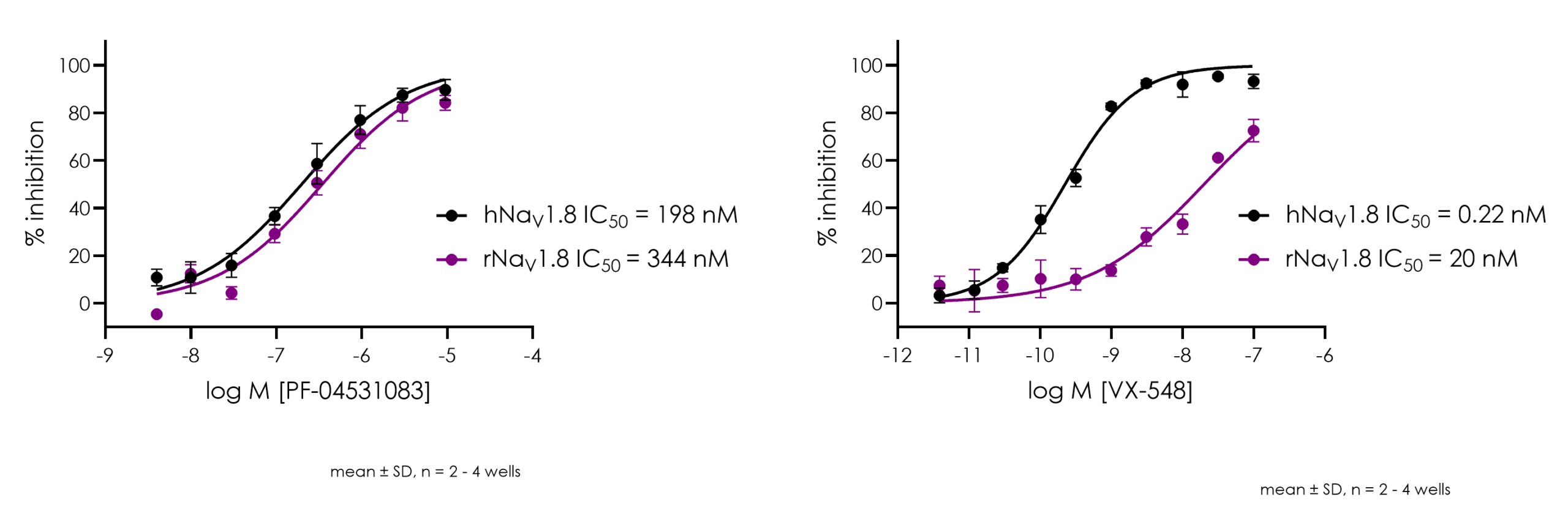
The assays have been validated using detailed biophysical characterisation, current stability assessments and pharmacological profiling with established NaV1.8 inhibitors, including PF-04531083 and VX-548. Assay performance has been demonstrated across manual patch clamp, QPatch and Qube platforms.
Can Metrion support NaV1.8 hit identification and lead optimisation?
Yes. Metrion's validated NaV1.8 assays are routinely used to support hit confirmation, potency determination, structure-activity relationship studies, lead optimisation and candidate selection activities.
Can NaV1.8 assays be used to investigate mechanism of action?
Yes. Manual patch clamp studies can provide detailed information on channel activation, inactivation, state dependence and inhibitor pharmacology, helping researchers better understand compound mechanism of action.
Why use automated patch clamp for NaV1.8 screening?
Automated patch clamp platforms such as QPatch and Qube provide robust, reproducible electrophysiology data with increased throughput. These systems are particularly well suited to screening and lead optimisation programmes that require evaluation of larger compound sets.
Why choose Metrion for NaV1.8 screening?
Metrion combines extensive ion channel expertise with validated assay platforms, gold-standard electrophysiology capabilities and experienced scientific teams. We support clients throughout the drug discovery process, from early screening through to candidate selection and translational pharmacology studies.
Who produces the Qube and QPatch platforms?
The Qube and QPatch automated patch clamp systems are developed by Sophion Bioscience, a leading provider of electrophysiology instrumentation used throughout the pharmaceutical, biotechnology and CRO sectors. These platforms are widely adopted for ion channel research and drug discovery, enabling the generation of high-quality electrophysiology data for compound screening, pharmacological profiling and lead optimisation studies. Metrion uses both QPatch and Qube systems to provide flexible screening solutions ranging from detailed pharmacological investigations to higher-throughput compound evaluation.