

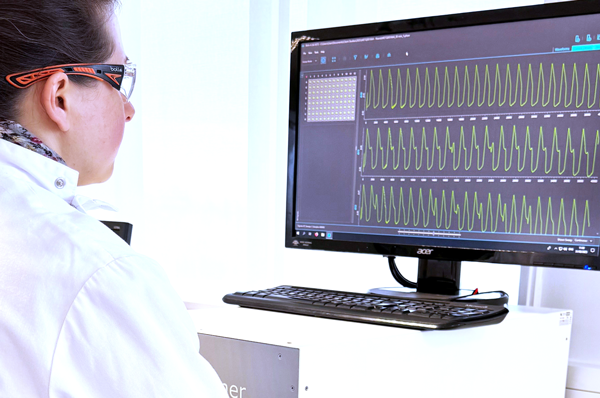
The key question is no longer whether to adopt NAMs, but how to implement them with confidence while continuing to meet evolving regulatory expectations and protecting programme value.

Late-stage drug failure is not just a scientific setback; it is a major financial risk and reputational blow. Cardiac safety issues alone account for up to a third of clinical attrition.
Metrion’s validated, clinically translatable, hiPSC cardiomyocyte assay, powered by the VOLTA platform, delivers human-relevant, ICH S7B-compliant data early in development, enabling confident decisions about which candidates to advance.

Integrating a clinically translatable assay into your preclinical strategy allows you to protect your development investment, maximise speed to market, and ensure every pound of R&D spend is strategically deployed.
Reduce the risk of costly late-stage failure
Allocate capital towards candidates with the highest probability of success
Accelerate time-to-decision and reach key milestones faster
Protect shareholder value and avoid expensive rework
Strengthen your approach to risk management and due diligence
Fully aligned with regulatory expectations and new approach methodologies
High-throughput, reliable detection of compound-induced effects such as QTc prolongation and arrhythmogenic risk, well before in vivo or clinical studies
Suitable for a range of compound modalities, including those with complex ion channel pharmacology
Seamless integration with cardiac ion channel profiling and toxicity testing
Detect and contextualise risk earlier, including effects missed by acute ion channel studies
Streamline workflow with expert support at every stage
Metrion’s assay, which uses cardiomyocytes derived from human induced pluripotent stem cells (hiPSC), is an advanced tool for assessing cardiac risk early in drug discovery. This state-of-the-art model enables researchers to evaluate new pharmaceutical compounds in the initial phases of development, providing more accurate and efficient predictions of possible cardiac hazards.
With ongoing innovation in the pharmaceutical sector and the identification of new drug candidates, maintaining a robust safety profile is essential. Cardiac complications, such as arrhythmias and QTc prolongation, continue to be a primary reason for late-stage trial setbacks. Metrion’s hiPSC-based cardiomyocyte assay delivers valuable early insights to help minimise these concerns, enhancing drug safety and reducing the dependence on expensive animal testing.
Partnering with Metrion gives you direct access to clinical insight and expert interpretation, helping you avoid late-stage rework and demonstrate robust due diligence. All critical cardiac safety studies can be run with a single, experienced partner.
To discuss positioning your pipeline for fewer surprises, reduced costs, and greater value creation, please contact us for a confidential discussion.
The key question is no longer whether to adopt NAMs, but how to implement them with confidence while continuing to meet evolving regulatory expectations and protecting programme value.
Optical voltage imaging of human iPSC-derived cardiomyocytes was used to assess electrophysiological effects of compounds beyond hERG inhibition. Action potential waveform analysis revealed compound-specific and concentration-dependent changes, enabling mechanistic differentiation of multichannel activity and demonstrating a human-relevant approach for translational cardiac safety assessment.